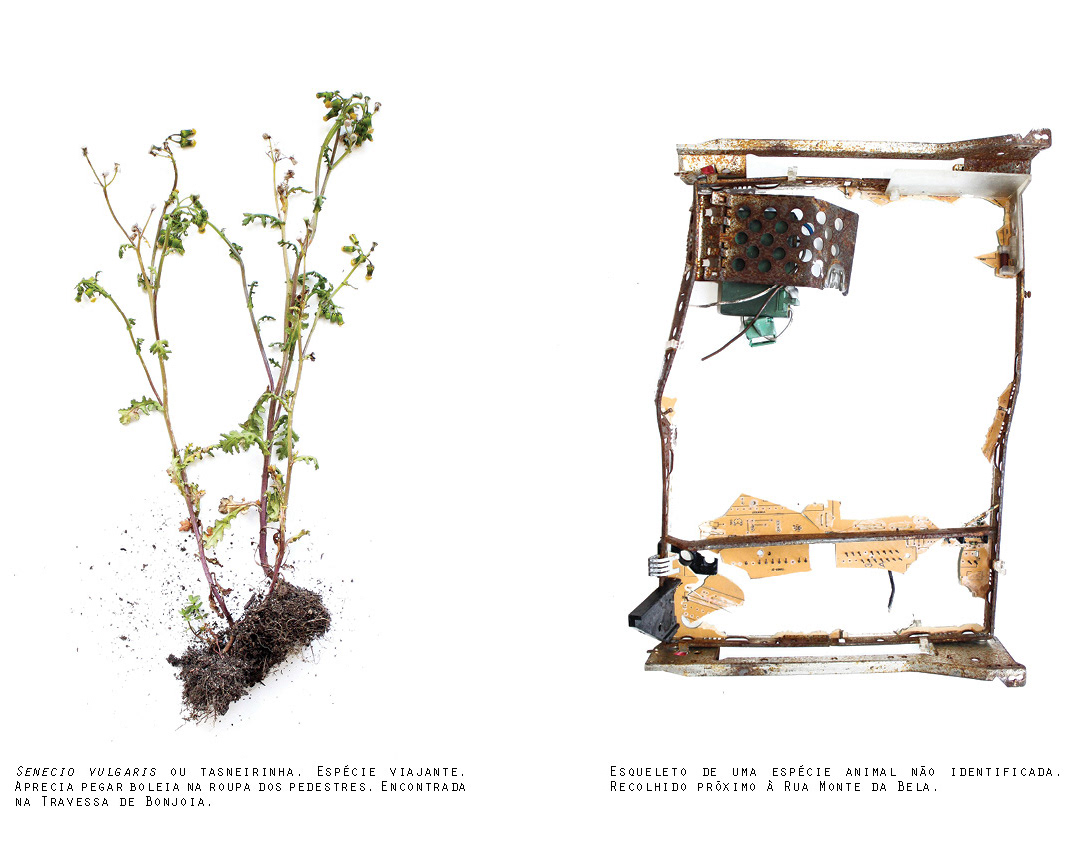
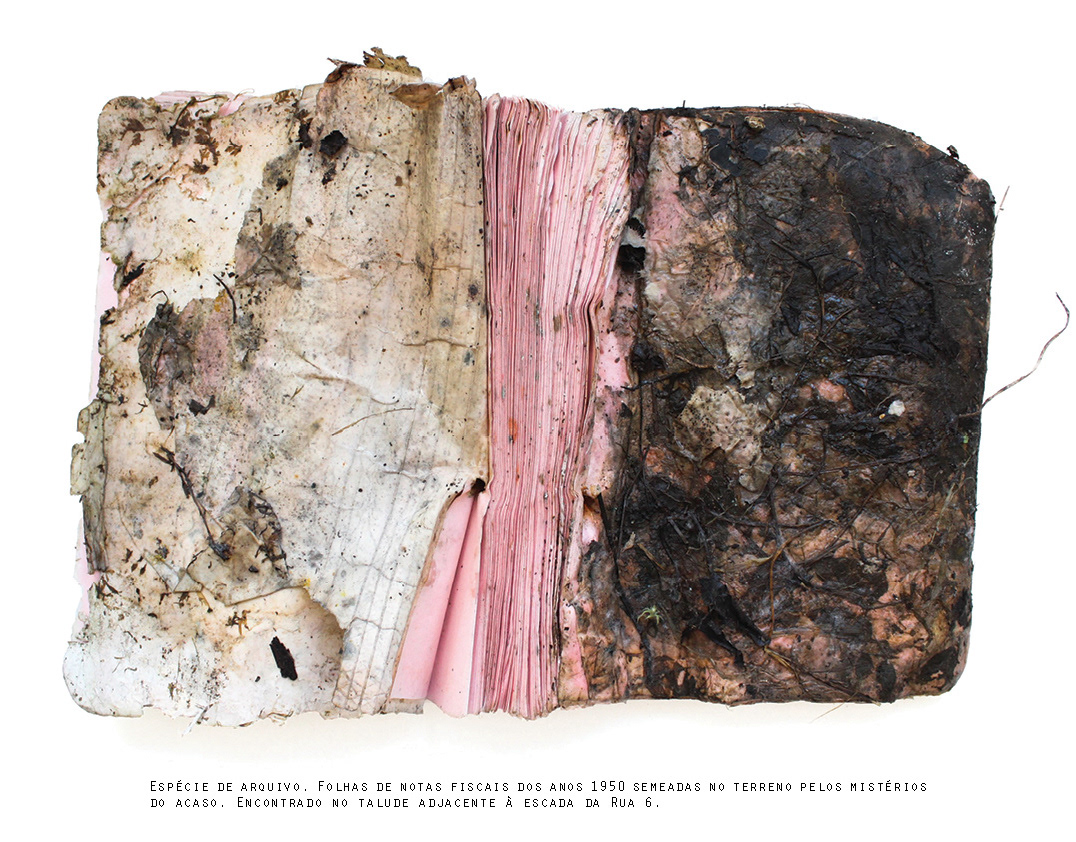
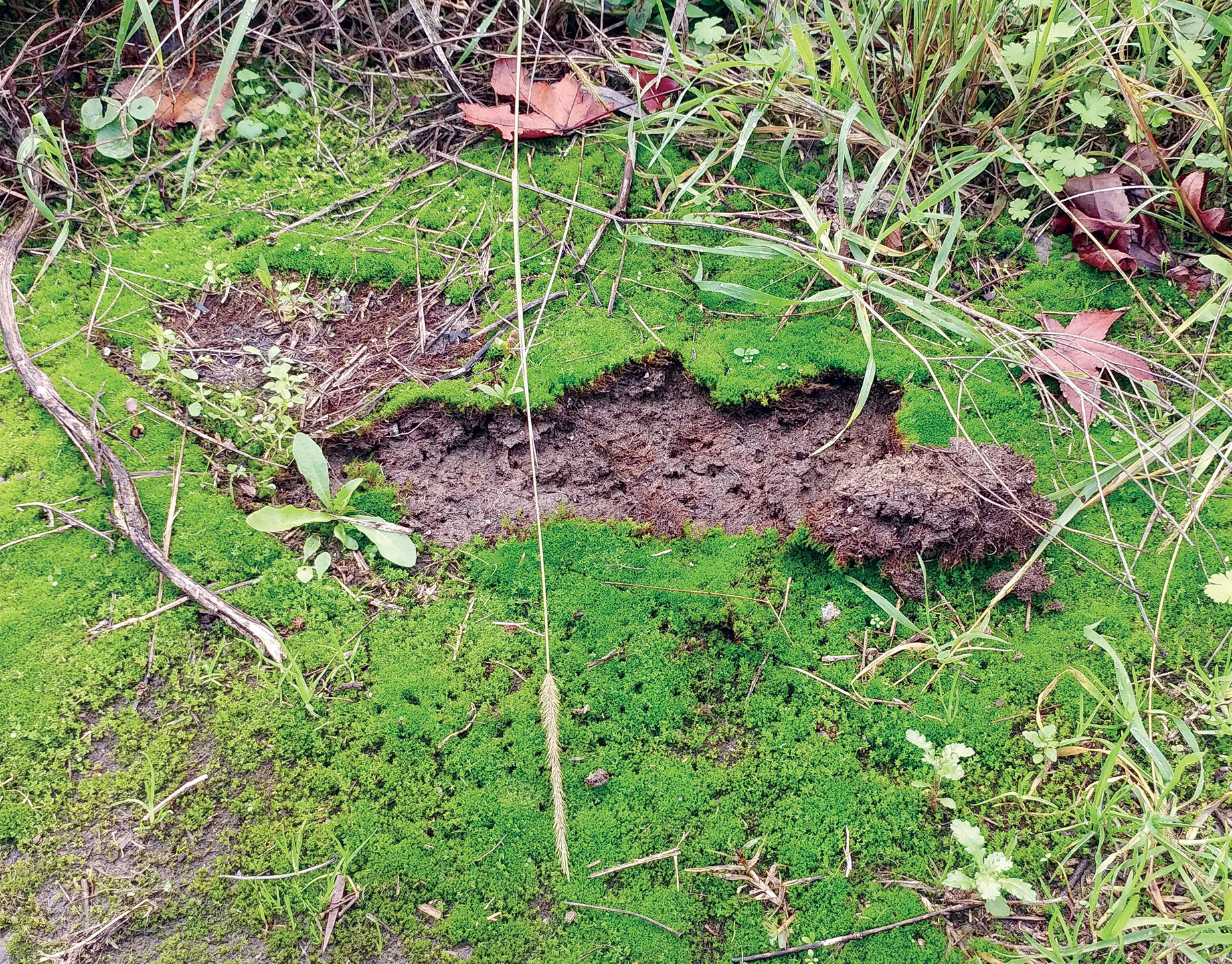
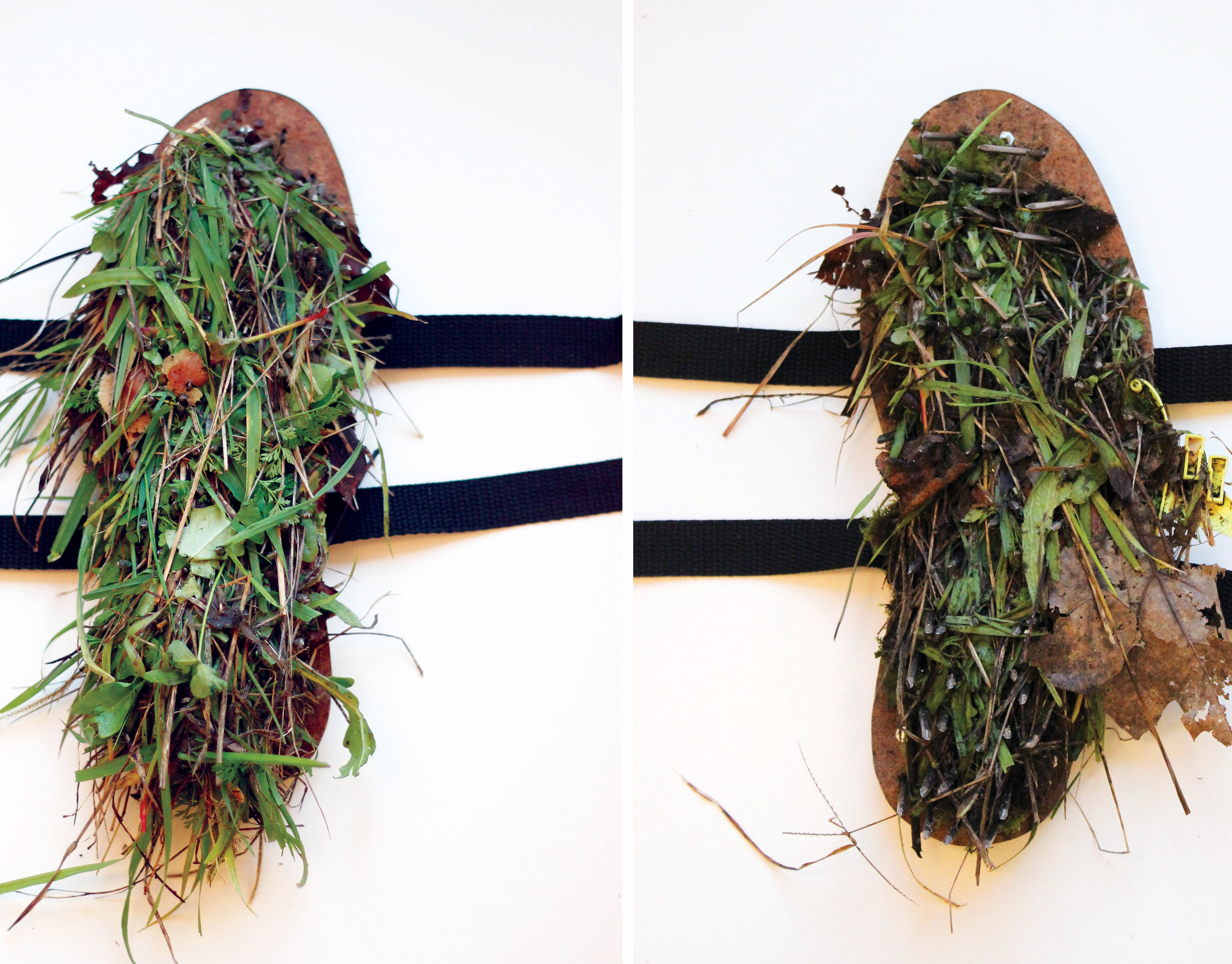
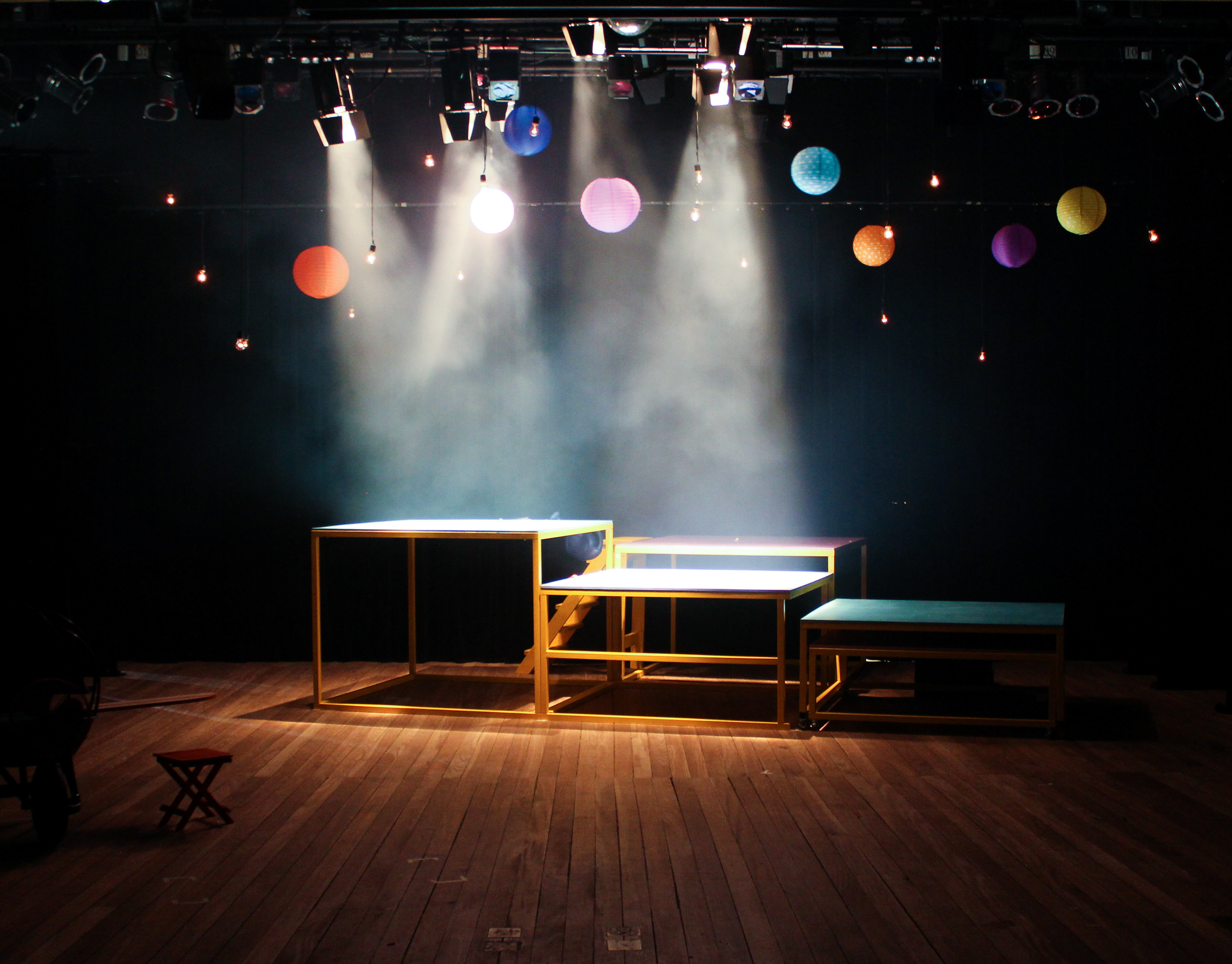
BORDER PRACTICES (Fortaleza, Ceará/BR, 2015_2016)Artistic research project developed through the Visual Arts Laboratory at Escola Porto Iracema das Artes, in collaboration with Ivana Amorim and under the supervision of Ricardo Basbaum. It was exhibited at the Museum of Contemporary Art of the Centro Dragão do Mar de Arte e Cultura between December 2015 and February 2016.
The work Border Practices was developed through a process of research and immersion at the Rua José Avelino street market, located next to the Museum of Contemporary Art at Dragão do Mar, in central Fortaleza.
For around ten years, this street had been occupied twice a week by a clothing market attracting manufacturers, informal traders, and buyers from several cities across the North and Northeast of Brazil. Although the market operated on days, at times, and within an urban perimeter agreed with the municipal authorities, these limits were constantly exceeded by the vendors, generating recurrent conflicts with inspection authorities over the use of public space, as well as public reactions against the practice that often marginalised it by associating the area with insecurity and unhealthy conditions.
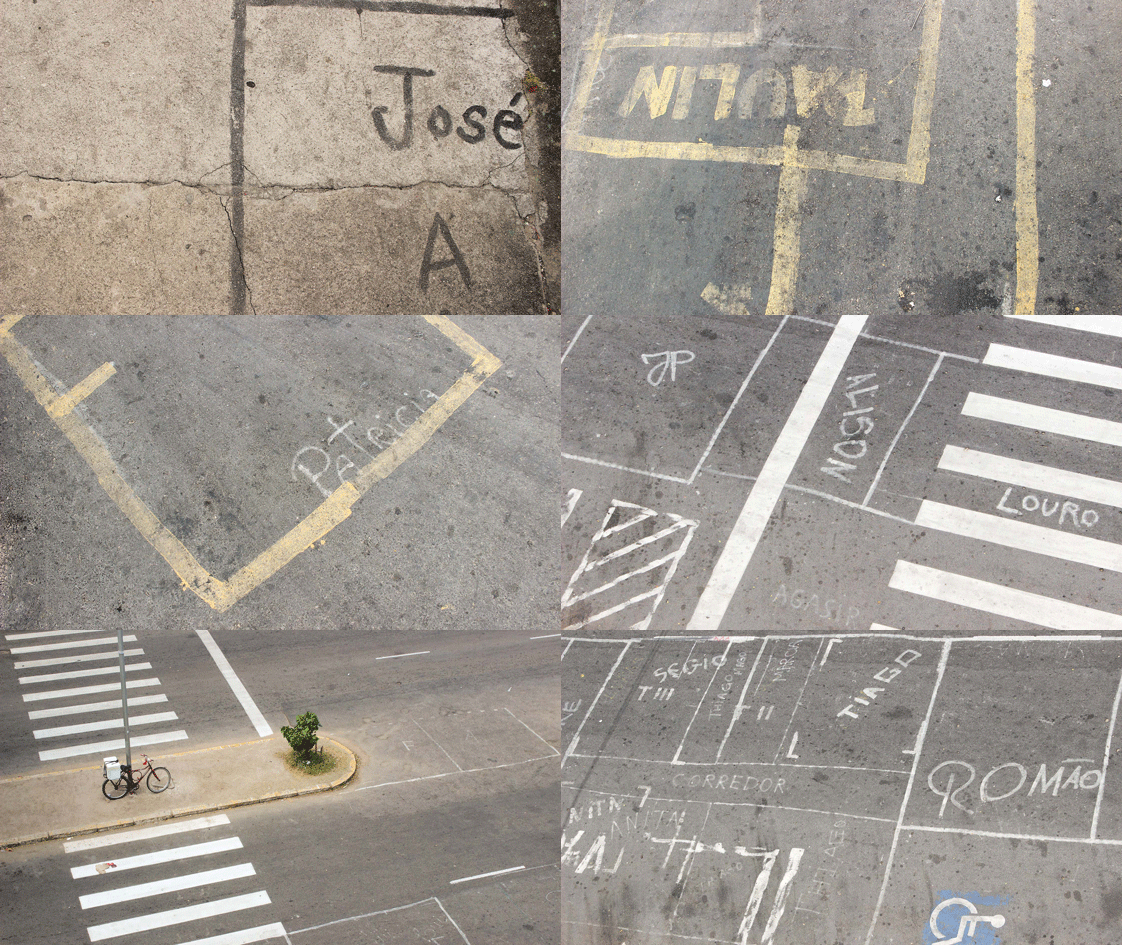
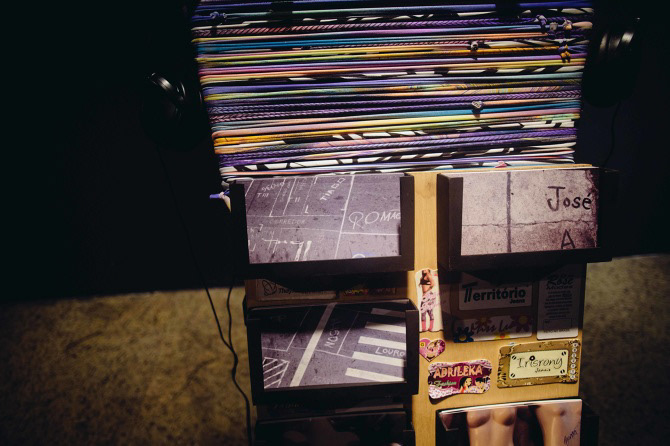
To make its existence possible, the vendors developed a series of strategies and codes governing their occupation of the site, particularly with regard to the sharing of public space. There are, for example, clearly defined agreements concerning the ownership of each selling spot, which consists of sections of the street allocated among vendors and usually marked by lines and names written on the asphalt.
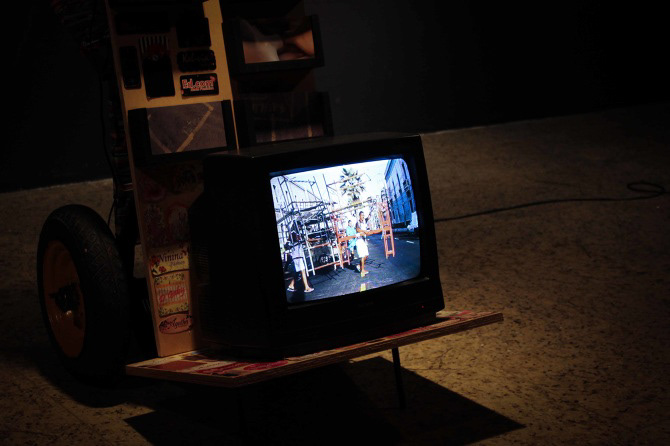
These strategies also extend to the ephemeral ways in which the market is set up in the street. Its spatial structure is composed of iron and wooden stalls covered by large coloured tarpaulins, which can also be laid directly on the ground to delimit commercial areas. These arrangements are held together by improvised solutions and makeshift ties using fabric scraps left over from clothing production; precarious and clandestine electrical installations where power cables become tangled; and narrow passages that negotiate slopes and potholes with bricks and wooden planks. It is, by definition, an unfinished space, bound to continuous construction and dismantling, to a repetition that takes a different form each time because it is governed by flexible rules expressed through a fluid architecture.
Within the logic of the formal city, the market establishes itself as a kind of rebellious rupture. Its existence brings to the surface questions concerning regulation and the excessively controlled character of urban space. It is set up within an area of the city conceived as a cultural and tourist complex, imposing itself in this context as a nuisance, a stain, a manifestation of the unpredictable within the straight lines of the plan.
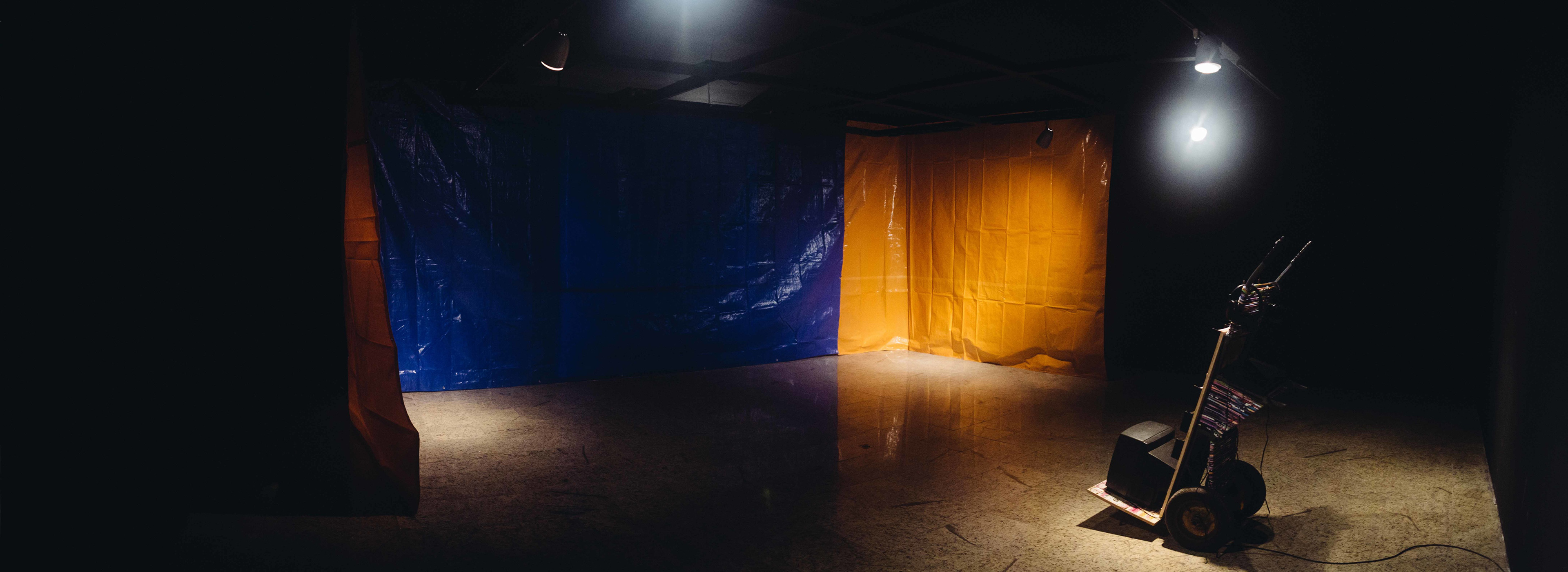
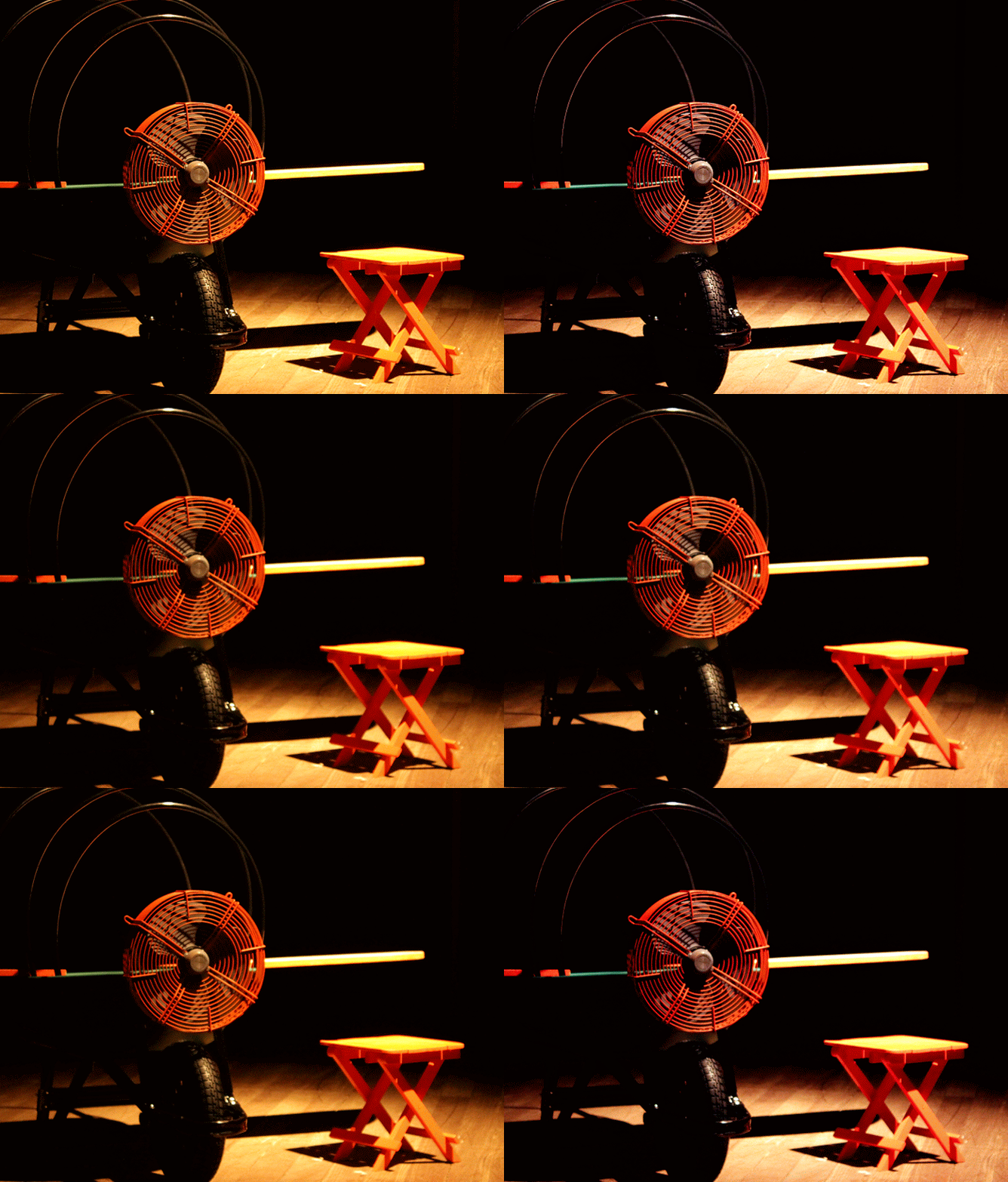
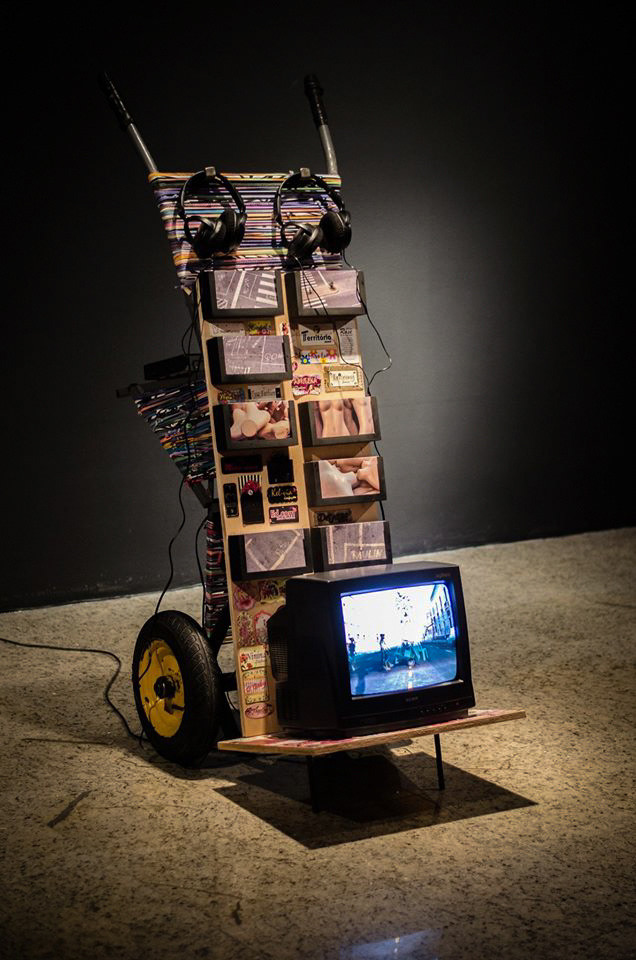
The work starts from the idea of contamination between two territories and practices that, despite being adjacent, remain mutually unfamiliar: the institutionalised space of the museum and the informal space of the market. The solution adopted consists of adapting a handcart, similar to those used by market porters to transport goods and materials, into a mobile unit that enables the circulation of the main elements produced for the exhibition between the museum and the market.
These consist of a video, photographs distributed as postcards, audio pieces developed from conversations with the vendors, and a collection of labels assembled during the research process. Together, they reflect on ideas of boundary, conflict, and contagion between the market and the formal city, as well as on the strategies used by vendors to secure private ownership and to divide and manage public space.
CREDITS BORDER PRACTICES
Research, concept and production
Flora Paim e Ivana Amorim
Project supervisor
Ricardo Basbaum
Cinematography
Flora Paim
Video editing
Lis Paim
Colour correction
Joana Rodrigues
Field recording – market ambience
Vivi Rocha
Recording of conversations with market vendors
Flora Paim e Ivana Amorim
Editing of market ambience recordings (exhibition room sound)
Henrique Gomes
Editing of conversation recordings (headphones)
Flora Paim e Lis Paim
Mixing of conversation recordings (headphone sound)
Daniel Nunes
Research, concept and production
Flora Paim e Ivana Amorim
Project supervisor
Ricardo Basbaum
Cinematography
Flora Paim
Video editing
Lis Paim
Colour correction
Joana Rodrigues
Field recording – market ambience
Vivi Rocha
Recording of conversations with market vendors
Flora Paim e Ivana Amorim
Editing of market ambience recordings (exhibition room sound)
Henrique Gomes
Editing of conversation recordings (headphones)
Flora Paim e Lis Paim
Mixing of conversation recordings (headphone sound)
Daniel Nunes